About Alan Stratton

Alan Stratton has been a member since August 11th 2017, and has created 668 posts from scratch.

Alan Stratton's Bio

Alan Stratton's Websites

This Author's Website is http://www.AsWoodTurns.com

Alan Stratton's Recent Articles

A Woodturning Primer: Basic Sphere Process

If you happen to have technical difficulties, this video is also posted on YouTube and FaceBook. But it is best right here.
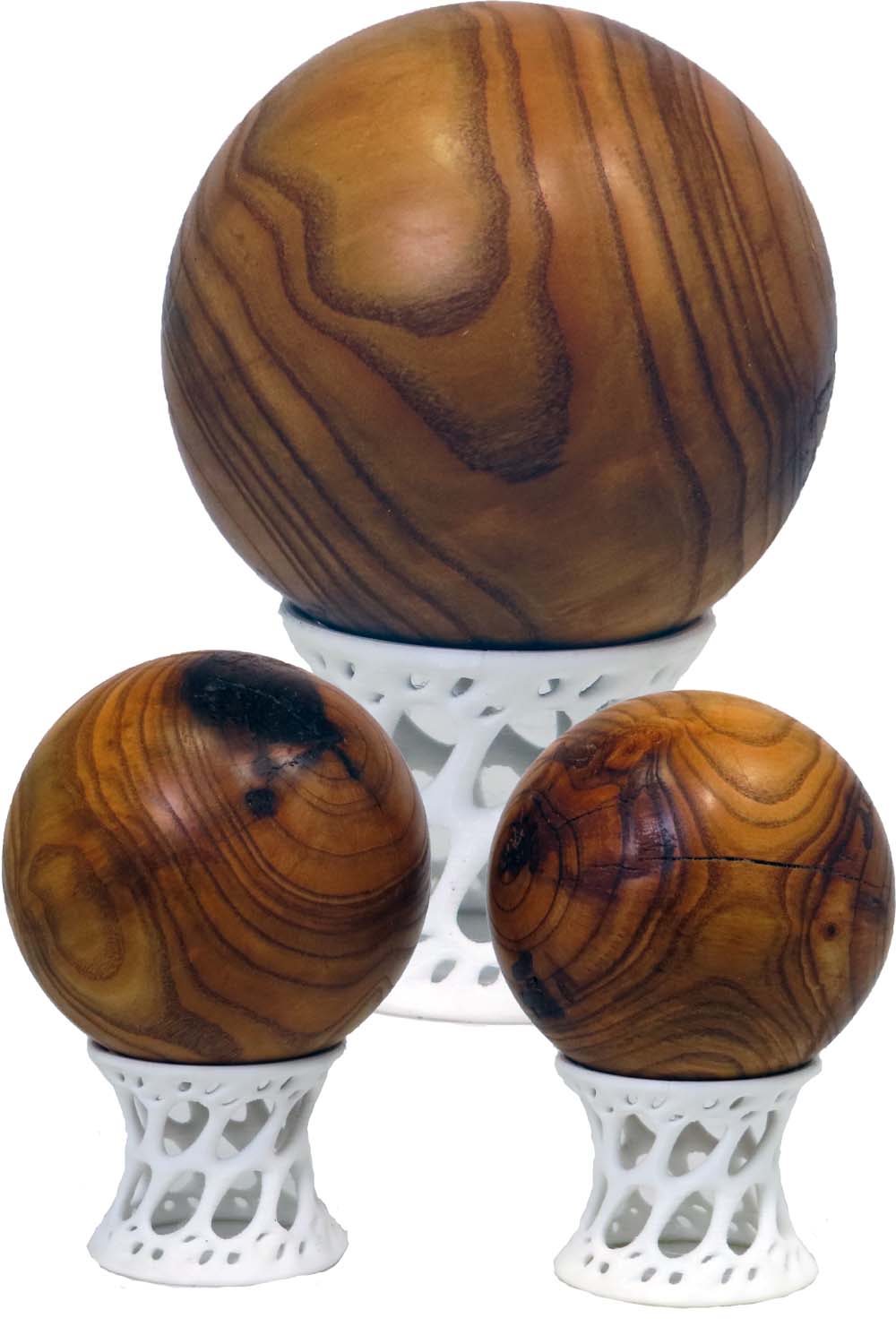
While I have demonstrated turning spheres several times both in clubs and in videos, it seems that the internet needs a refresher. It seems that way too many people think that a sphere jig is the only way to turn a perfect sphere.

I completely disagree. While a sphere jig looks neat and cuts a perfectly round sphere–mostly. It leaves a nasty tenon and still requires sanding and often, much more. Even worse, a jig does not provide fundamental skill development that can be used in many similar projects.

Therefore, I decided to shoot a new video focusing on the basic process to turn a sphere without any jig. My process uses the octagon technique to rough turn a sphere and some simple cup faceplates.

Frequently, in future videos, I will undertake additional projects the either extend or derive from a sphere.

While I explain the process in the video, there are two key factors that are important to the process:
The length of an octagon’s side is 0.414 times the diameter of a cylinder containing the sphere.
Assuming the cylinder length is also equal to the diameter, the distance from the cylinder corner to the corner of an octagon is 0.293 times the diameter. Store these factors in a note on your phone – they are valuable.

This sphere is about 3 inches diameter from plum and finished with beeswax and mineral oil.

Enjoy.

p.s. Would you like a more in depth demonstration? Please contact me for an IRD (Zoom Demo) on this or other topics.
Turning Square Bottles With Laser Etch Medallions

If you happen to have technical difficulties, this video is also posted on YouTube and FaceBook. But it is best right here.

Square Bottle

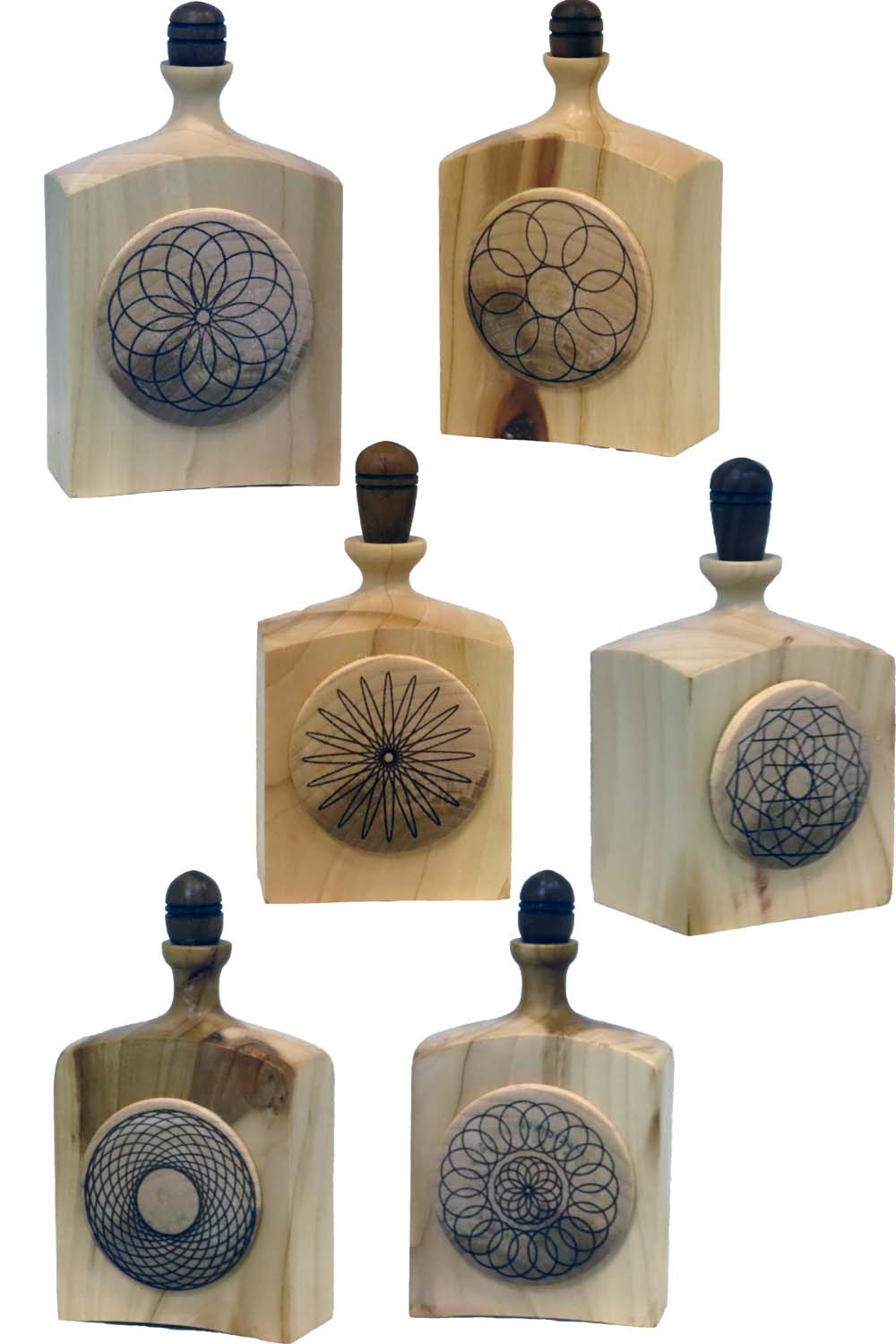
I saw a demonstration similar to this project at last summer’s AAW symposium. When I came home, I added it to my todo list. While the demonstration was excellent, I did not want to spend the time hollowing like the demonstration when my drill press can do as good a job and more quickly. The key skill for this project is to cut in from the square edge with tool control and not chipping the edge. Fortunately, this project gives plenty of opportunities to practice.

Turning the medallions is much easier when sizing templates are used. I used 1.75″ template for the outer diameter and 1.5″ template for the mounting tenon. My templates are easily 3D printed or turned from 1/4″ hardboard.

The bottle wood is apple, about 2x1x3 inches finished shellac. The medallions are hazelnut with LED laser etched mandala patterns.

Enjoy.

Safely Turning Large Square Platter

If you happen to have technical difficulties, this video is also posted on YouTube and FaceBook. But it is best right here.

Saman Square Platter

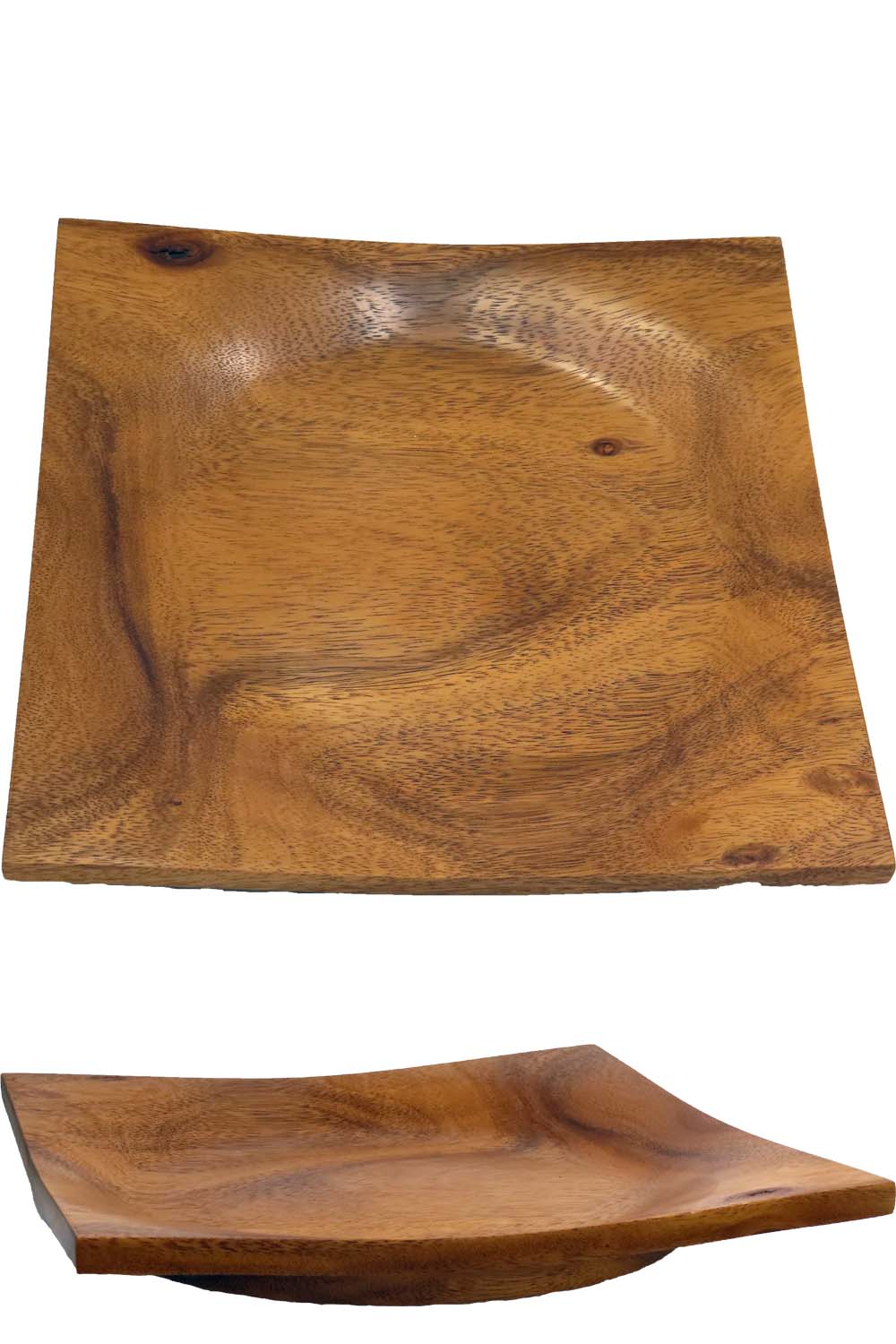
When a fellow club member moved from the area, I inherited a couple of pieces of saman wood that he had brought back from Venezuela after he lived there for a while. It is 12 by 12 inches and looks to have beautiful grain and color.

I decided to turn a square platter. Unfortunately, turning a square platter is dangerous, even more dangerous when for larger dimensions. The danger comes from the corners rotating at high speed. If the turner happens to let a finger or hand in the path of the rotation, there could be broken skin, bone, or, at least, bad bruises. In addition, leading and trailing edges are prone to chipping. For the turner, riding the gouge bevel is impossible in the corners.

My solution is to glue additional wood around the square. The plan is to turn the round platter in the extended wood blank. This leads to another problem. Once the platter is turned, remove the wood. But how? A band saw does not cut straight without jigging and leaves a rough edge. Cutting a round object on a table saw is also dangerous. Again, my plan is to screw on another board which then will serve as a guide to ride the saw fence. But, I cannot turn the platter with the board attached. Instead, unscrew the extra board and screw it again to all the added boards using the same screw holes. Then remove the board completely. After all turning is complete, reattach the guide board using the same screw holes. Using the guide, saw the opposite side; remove and re-attach to another side that is at right angles; saw again; remove the board. The freshly cut sides serve as a guide while cutting the remaining sides.

Voila, a large square platter. The big plus is that I am still intact.

The wood is saman, about 12×12 inches finished with wipe-on poly.

Enjoy.

Multi-Axis Christmas Ornament

Multi-Axis Ornament

If you happen to have technical difficulties, this video is also posted on YouTube and FaceBook. But it is best right here.

Both my clubs are participating in a Christmas themed fund raising event. The club members are contributing Christmas tree ornaments to decorate trees which will then be auctioned off for charity.

My ornament has a center body and two finials.
The body is red bud and the finials are hazelnut.

For the body, I wanted more than a traditional globe. Inspired by my recent pumpkin project, the body is a multi-axis turning with deep coves at right angles to the original turning axis.

The trick, in this case, is to ensure the coves are well spaced and at right angles to the original axis. To be well spaced, I adapted a cup chuck to have indexing marks.

To ensure the new axes are at a right angle, I drilled a 0.25 inch hole through the body before turning it into a sphere. By inserting a rod through this hole (later in the process), I could measure the distance from the rod to the headstock. Equal measures on both sides means right angles.

Since I now had a hole through the body, I needed to use a pen mandrel to rough turn the sphere. This hole also receives the finials’ tenons.

Of course, the octagon process helps to turn a perfect sphere. Just remember two measures to use the octagon process: 0.293 times diameter and 0.414 times diameter. Please see my other videos for context for these measures.

Enjoy.

p.s. Would you like a more in depth demonstration? Please contact me for an IRD (Zoom Demo) on this or other topics.

A two’Fer – Ogee Curve Platter With Bowl Funnel Salvage

Walnut Platter

This project turns out to be a two’fer:
1) Our club challenge is to create a platter with an ogee curve.
2) A fellow club member created a funnel that was to join the burn pile.

Better yet, take excess wood from the ogee platter to create a second thinner platter with the same series of lathe mounts.
An ogee curve is a combo bead and cove. It is a classical form that have been pleasing eyes for centuries.

My platter is about 8″ diameter by 2″ height, walnut finished with wipe-on poly.
My second item is about 8″ diameter by 4″ height, walnut finished with wipe-on poly”
Bottom: Platter from the same wood block as the ogee platter
Middle: Failed bowl from a club member who created a funnel rather than a bowl.
Top: Smallest cored bowl.

By the way, what do you call this second item.

Enjoy.