Woodturning Wave Bowl With Hollow Pedestal
 This video is also posted to YouTube, Vimeo, and FaceBook. Where Best? Right Here!
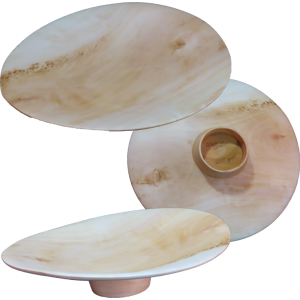
When turning wet wood for a wavy shallow bowl, I’ve been concerned for the pedestal part of the bowl. This large, thick piece of wood could be prone to checking and cracking as it dries.
So, for this bowl, I decided to try to hollow the pedestal. This requires one additional sacrificial tenon and another careful remount. Despite a couple of mis-calculations, it worked in the end. While the pedestal did warp with the rest of the bowl, it did not crack.
Enjoy!
Woodturning Basic Bowl – Never As Simple As It Should Be
 This Video is also posted to YouTube, Vimeo, and FaceBook. Right here at As Wood Turns is where it is best!
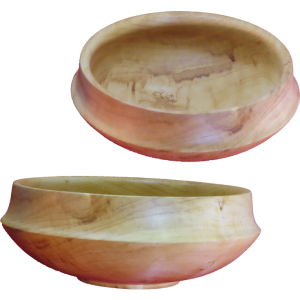
This piece of wood came from the club wood exchange. Someone had started to turn it wet but stopped and gave it away. Now it has set around for long enough that it is dry. Fortunately, it did not crack in the drying process. Lucky break.
I kept the original outside shape but that precluded some remounting options for turning the foot. Since the original divot was not true, I chose to carve the foot with a right angle tool with a rasp cutter. That worked better than I expected.
As for the original woodturner- his loss is my gain. It is a pretty bowl.
Resources
- Carving Tools
- Variable Speed Angle Grinder
Proxxon Longneck 2″ Variable Speed Angle Grinder
I don’t see this model around much any more.
- Variable Speed Angle Grinder
Enjoy!
Multi-Axis Woodturning Octahedron
 This video is also posted on YouTube, Vimeo, and FaceBook. But, you’re already here!
As I’ve noted before, I was impressed by demonstrations by Max Brosi at the AAW Symposium at Raleigh, NC this summer.
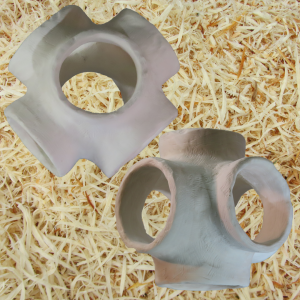
At first, I could not figure out how to turn this octahedron. However, once I understood the process that Max follows, then I have no fear any longer. Further, I can adapt the process to use some already familiar techniques.
Basically, this is an exercise in mounting wood. This project used both drive centers and a chuck with multiple mounts. Beyond that, you’ll need to watch the process.
Resources
- DIY Wood Bleach For A Lighter Hue https://www.aswoodturns.com//2019/09/wood-bleach/
- Carving Tools
- -Variable Speed Angle Grinder
Proxxon Longneck 2″ Variable Speed Angle Grinder
I don’t see this model around much any more. - -Micro Motor Carver
Ram iCube 07-ICUBE
I purchased this at AAW symposium from MDI Woodcarvers Supply
- -Variable Speed Angle Grinder
Enjoy!
DIY Wood Bleach For A Lighter Hue
 This video is also posted to YouTube, Vimeo, and FaceBook. Best right here!
After seeing several examples of turning projects that had been bleached, I decided to try bleaching wood myself. I researched on the internet and found some great resources especially from AAW.
I also checked for commercial wood bleach products. Most of these turned out to be wood cleaners based on oxalic acid.
The solution I settled on is a two part solution. One part is a lye (sodium hydroxide) solution. The second part is hydrogen peroxide, a pool sanitizer. The tricky part was finding sources for both chemicals. For the lye, Amazon has pure lye crystals in their soap making section. For the hydrogen peroxide, a 27% solution is sold at swimming pool suppliers. Drug store hydrogen peroxide may say 27% but is actually more dilute.
Preparation
The 1.5 teaspoons lye crystals are added to 1/2 cup water and stored in a well marked plastic container with a good plastic lid. Safety Note: Always add the crystals to water not vice versa. The vice versa is likely to spatter lye.
The 27% hydrogen peroxide is used as is.
Since both of these chemicals are potentially dangerous, pay attention to personal and property protection. Working outdoors with gloves, goggles, and protected surfaces is recommended.
Application
Mix equal parts of the lye solution and hydrogen peroxide in a plastic or glass container and apply to the wood to be bleached with either a cheap brush or dipping. Allow to dry. The solution will likely bubble.
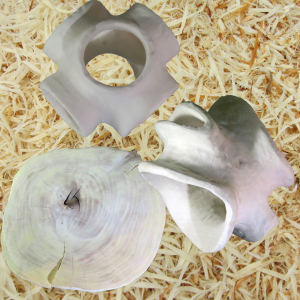
For these items, I applied the mixed solution four times. Results vary with the wood species, wood preparation, and grain orientation.
When bleached, I applied household cleaning vinegar(acid) to neutralize the lye, a base. From the research, this step is optional.
My thin cross-grain disks from pear wood warped and cracked when the solution was applied.
Enjoy!
Woodturning – Wild, Warping, Cross Grain Disks
 This video is also posted on YouTube, Vimeo, and FaceBook. Best right here at As Wood Turns.
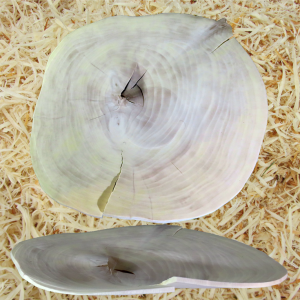
After seeing Pascal Oudet from France at the AAW symposium demonstrate, I came home to try it myself. I hoped to replicate the look and feel of his project. Pascal also sand blasts and bleaches many of his projects.
However, I used fresh wet ornamental pear while he used French oak. The choice of wood, I think makes a difference for this project. Oak has more pronounced grain with hard and soft rings. Oak is also a tough wood that holds together well. On the other hand, the pear was more uniform and probably not as tough.
Next time, I try this, I’ll use oak or another wood with definite hard and soft rings.
Essentially, I mounted the wood while I cut a mounting tenon. Then cleaned up the live center side. Then gradually cut back on wood next to the headstock until I had a disk about 1/8 inch thick. Wet wood is flexible and already warping by the time I turned down to the center. I bleached my disks but did not see that sand blasting would have the same effect as on oak.
It was a wild experience. On my third try, I completed a disk that was intact. However, as it dried, it warped as expected and cracked not as expected. While bleaching the wood, it cracked even more.
Enjoy!
Woodturning – Implementing New Skills From Expert Demo
 This video is also posted to YouTube, Vimeo, and FaceBook. Best right here.
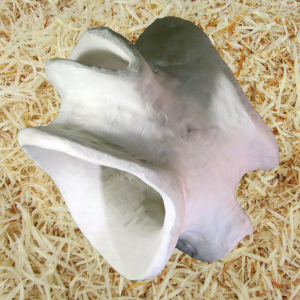
After I see a great demo by someone who truly turns something unique, I just have to try it myself. This is my situation after seeing Max Brosi at the AAW symposium demonstrate what he called a whale bone form.
The project starts with wet wood with as much diameter as possible. First, turn a sphere. Please see my videos on spheres for more details. Max used the same process up to the point of using cup centers.
One difference is that he could construct an octagon with a compass. I solved it with geometry and some math. The result is the same. From any end to a corner is the diameter times 0.293. Any side is the diameter times 0.414.
But, for this project, I don’t need a perfect sphere. So, the octagon method by itself is sufficient. Leaving the octagon mounted between centers:
- Mark lines at 30 degree intervals around the sphere and the equator line.
- Re-mount the sphere on two opposing marks. Cut a groove.
- Re-mount the sphere on equivalent marks the opposite direction. How much will determine the side and end openings. Cut a groove of equal depth and width.
- Re-mount the sphere again in the middle of the widest set of grooves. Here I did the next part a bit differently. Cut a tenon on the end around the mounting center.
- Re-mount on a chuck using the new tenon.
- Hollow as much as possible from this side
- Cut a mortise inside the new hole.
- Re-mount using the new mortise.
- Hollow the remainder from this side
- Carve the remainder.
This is a fun multi-axis project. My thanks to Max Brosi. My thanks to Max Brosi. He infected me with some great ideas.
Enjoy!
Woodturning Green Olive Into Figured Bowl
 This video is also posted to YouTube, Vimeo, and FaceBook. Best right here already!
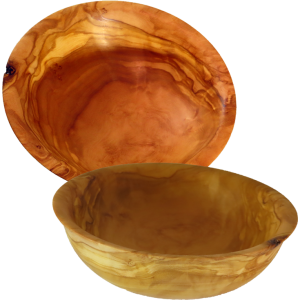
Months ago, at a club wood exchange, I received a small block of olive. I was excited because I think olive is a very petty wood to turn.
The wood felt dry, but as I started to turn it, I discovered that it was actually very wet. I like wood to be either very dry or very wet. If very dry, I hope is has not developed checks. If very wet, I hope to avoid checks and cracks.
After rough turning the bowl, I sealed the wood with Bowl Saver a glue like sealer from Craft Supplies USA. Then I let it dry but weighed it about every month. It has gone from 315 grams to 212 grams, about one-third of its weight. For me this is typical.
My finished bowl is about five inches diameter and two inches tall. It is finished with walnut oil. I will not buff this one. The matte finish is perfect.
Enjoy!
Woodturning Rustic Birdhouse From Green Apple Cores
 This video is also posted to YouTube, Vimeo, and FaceBook. Where Best? Right Here!
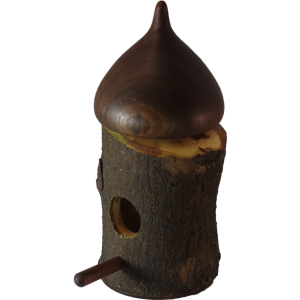
During my spring pruning, I cut off a large limb from an apple tree. At that time, I cut the limb down into sections of varying lengths and varying diameters. Leaving the natural bark, I turned tenons on each end and drilled out the centers. I placed the apple cores in a plastic bag with shavings to let them dry. After several days, I mixed up the shavings and wood again and let the plastic bag slightly open to allow moisture to escape. The wood stayed underfoot for a couple more weeks during which I “stirred” the wood and shavings. Then I moved the wood out to a shed making sure not to seal the plastic bag and left it alone for several months.
Since the wood is much thinner, the wood is dry. Since the pith has been drilled out, there are no radial checks.
- Mount the wood using the best original tenon.
- Remove the opposite tenon and drill out the wood as much as possible.
- Cut a groove inside the wood for an expansion mount. Remount the wood with an expansion mount.
- Dress the opposite end and fit a mortise and tenon joint and turn the roof section.
- Turn a disk to serve as the floor.
- Drill for entrance and perch.
- Turn a perch and glue the pieces together.
- Finish with an oil finish to brighten the bark and finish the turned sections.
My birdhouse is six inches tall and three inches in diameter finished with walnut oil. The natural bark is perfect for the main section.
Enjoy!
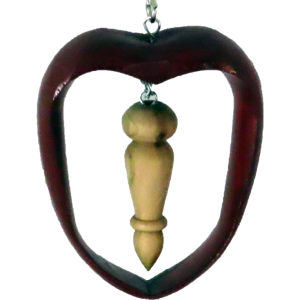
Woodturning Two Stave Inside Out Heart Pendent
 This video is also posted to YouTube, Vimeo, and FaceBook. Best right here already!
After turning a four stave vase, then a three stave art object, I was challenged to turn a two stave heart.
Wood preparation is much simpler. But undercutting the upper lobes was not. My band saw did not provide a very good option either.
Still, a two stave process may be perfect for a heart. Keep it in mind for next Valentine’s Day.
My heart is poplar about 2″ by 2″ x 0.5″ painted with acrylic paint and sealed with rattlecan lacquer. The finial is plum finished with shellac friction polish.
Enjoy!
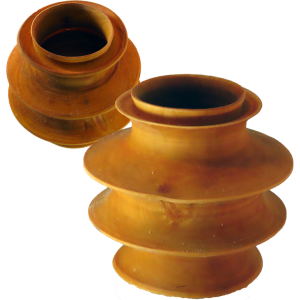
Weird Wood Art – My First Step Into New Woodturning Realms
 This video is also posted on YouTube, Vimeo, and FaceBook. Right here is where it is best.
After attending the American Association of Woodturners Symposium, I’m inspired to start turning beyond round. One particular source of inspiration is Max Brosi and his multi-axis turnings.
While this turning from pear is far from one of his, it is a first step. The outside is simply coves turned in green wood. But the center is also hollowed out. No, this is not multi-axis. Multi-axis will be then next step.
This is pear wood, turned green, and finished with walnut oil. 5 by 5.
Enjoy!