Two Natural Edge Bowls – One Up – One Down
 This video is also posted to YouTube, Vimeo, and FaceBook. But you’re already here at the best place.
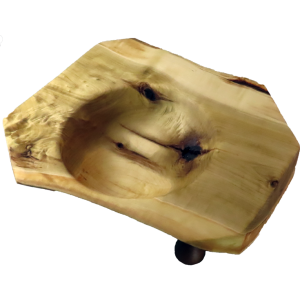
At a local club wood exchange, I received two identical slabs of wood. They were quite thin and I wondered what I could do with them. They seemed too thin for a standard bowl.
The bark was ugly so i pried it off. But, underneath that bark was an interesting natural edge. The first bowl was turned with the flat side down to show off the natural edge. But I did not want to make two identical bowls. The first bowl is at this link: This Natural Edge Bowl Will Not Tip Over
So, after worrying about how to safely mount the second bowl, I decided to turn it with the flat side up but leave the natural edge intact on the bottom. The difficulty was how to mount the wood.
Finally, I drove three long screws through a wood faceplate and into the wood. I positioned the screws where I could put knobs on the bottom to stabilize the wood. Three legs self level – Four or more would have been a nightmare to not have the bowl rock. Even then, the top is not parallel with the surface the bowl can rest on. But that adds to its appeal. The second bowl is 11 by 9 by 3 inches, finished with walnut oil. The feet are walnut.
Enjoy!
Self Storing Needle Threader For Sewing and Quilting
 This video is also posted to YouTube, Vimeo, and FaceBook. Best right here at As Wood Turns.
I remember my mother helping to thread a needle. It was the same problem whether it was thread or yard. A tiny needle hole, a big thread.
Now with more experienced eyes, it is even more challenging.
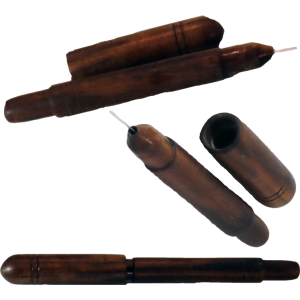
Why not make a needle threader? One that is big enough not to get lost. Yet, someone can use it to thread into those tiny needles.
My threader is walnut finished with CA, mineral oil and beeswax.
Enjoy!
Surprisingly Pretty Small Bowl From Pear
 This video is also posted to
This Natural Edge Bowl Will Not Tip Over
 This video is also posted on YouTube, Vimeo, and FaceBook. Where Best? Right Here Already!
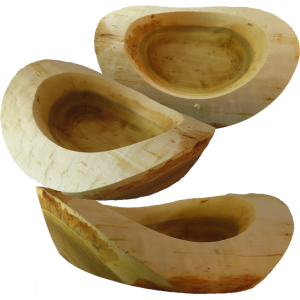
From a club wood exchange I have this piece of wood that I believe is poplar. It seems to be the left over slab from where a bowl blank was cut out. There is a lot of bark but not much wood.
It is a challenge that I decided to respond to.
What would you have done?
Enjoy!
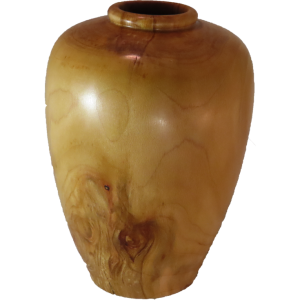
Deep Hollowed Aspen Vase – Easy With Right Tools
 This video is also posted on YouTube, Vimeo, and FaceBook. Best right here!
At a wood exchange I inherited a limb of aspen, not in great shape but worth turning and trying out my new deep hollowing system.
The vase is 7 inches tall and 5 inches in diameter finished with walnut oil and a thorough buffing.
The deep hollowing tool was provided by the Southern Woodturners to their members. Sorry, they are not selling them outside their club. However, they did a great job at a low cost.
They are about to change over from a laser mount to a camera. I had a USB inspection camera (source: Amazon – a long time ago) that I mounted to the laser mount and plugged into an old laptop. The built in Windows camera application then shows the position of the cutting tool. Before operation, I taped plastic to the computer screen and traced the outline of the cutter. Since the camera moves with the tool movement, I can see on the screen just where the cutter is that is inside the wood.
If you’ve used a laser for this purpose, try this out. You’ll never go back.
Sorry about the video of the computer screen. But, you’ll get the idea.
Enjoy!
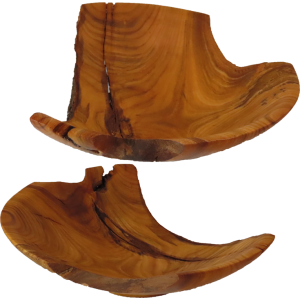
Fractured Apricot Bowl – Turn At Your Own Risk
 This video is also posted on YouTube, Vimeo, and FaceBook. However, you’re already here!
I went out to my woodshed and spotted an old apricot crotch that I have been saving “for a rainy day”. The wood is worse off for the time that it has been taking up space in my shed.
I decided to turn it anyway. But after taking safety precautions like a face shield and staying out of the danger zone.
This was scary with bark and wood flying off.
In the end, this is an unique, beautiful bowl.
Enjoy!
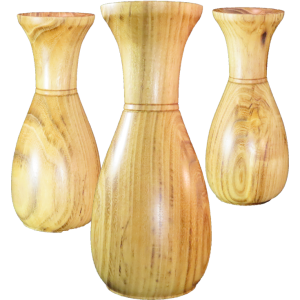
Deep Hollowing Green Turned Vase – The Easy Way
 This video is also posted to YouTube, Vimeo, and FaceBook. Where Best? Right Here!
Recently, I’ve experimented with different ways to turn a small hollow vase without doing the hollowing through the small neck of the vase.
This is one of the best options.
I originally rough turned this vase about a year ago. At that time, The rough shape was defined, tenons created, and some hollowing completed before sealing the wood.
After a year of drying, the wood is definitely lighter and dry. I proceeded to complete turning the vase.
What is different this time is the joint. To minimize wood lose at the joint and consequent grain mis-match, I used a separate internal double tenon to rejoin the two pieces together – the base and the neck. This way I could disguise the joint with a very shallow groove and bead.
This and hollowing from the bottom are my preferred joining techniques.
For final hollowing I used a deep hollowing system from the Southern Utah Woodturners club. It is a great system but only provided to members of their club. Commercial equivalents are available.
Some references:
Previous videos (links):
- From Green Firewood To Vase – Deep Hollowing Wet Wood
- Woodturning & Hollowing A Vase – Not Through This Neck
- How To Hollow A Tall Thin Cherry Vase
- Update To My DIY Lathe Steady Rest
Enjoy!
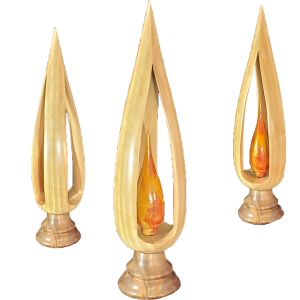
Woodturning Inside Out 3 Stave Art Flame
 This video is also posted to YouTube, Vimeo, and FaceBook. But you’re already here, aren’t you?
I had not completed a triple inside out turning for quite a while. So, after seeing Dale Dallon demonstrate an inside out flame, I had to jump back into it and incorporate the refinements I saw in his process.
Some of the refinements include:
- using CA glue dots to hold the first set of staves together
- using strapping tape for security
- cutting a groove for alignment when reversing
- rationalizing the wood preparation based on American Woodturner February 2010
Some facts:
- Board thickness(y) divided by 1.732 or thickness times 0.577 = distance to first cut(x).
- For a given board thickness(y), board width of 7 times x plus 2 saw kerfs is needed where x is the distance to the first cut.
- Subsequent cuts are 2x or y divided by 0.866 or y multiplied by 1.155
- A digital angle gauge is a great tool to set blade tilt.
Enjoy!
Decorating End Grain With Sorby Tool-Guest Presentation
This video is also posted to YouTube, Vimeo, and FaceBook. Where Best? Right Here!
Vladimer Swartsman, a fellow member of our local woodturning club consented to sharing his experience decorating end grain with a Sorby Spiraling and Texturing tool.
He shows how to sharpen the tool and how to position the tool for a variety of different textures. Then shows how to make the design strong with some color. Any wood can be textured.
Many thanks to Vladimer.
Enjoy!
Woodturning Spalted Sweet Gum Cross Grain Box
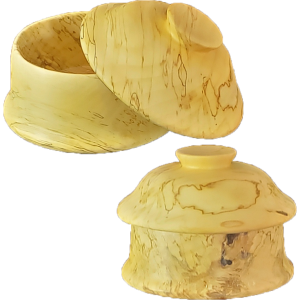 This video is also posted to YouTube, Vimeo, and FaceBook. Where Best? Right Here Already!
After a recent demonstration, I decided to turn my own cross grain box. The wood I had available was smaller than that in the demonstration. Yet, I find the spalting in this sweet gum to be quite pretty.
My box is 5 inches in diameter and 4 inches in height, finished with beeswax and mineral oil.
Enjoy!